
Tulum's roads: what to watch out for
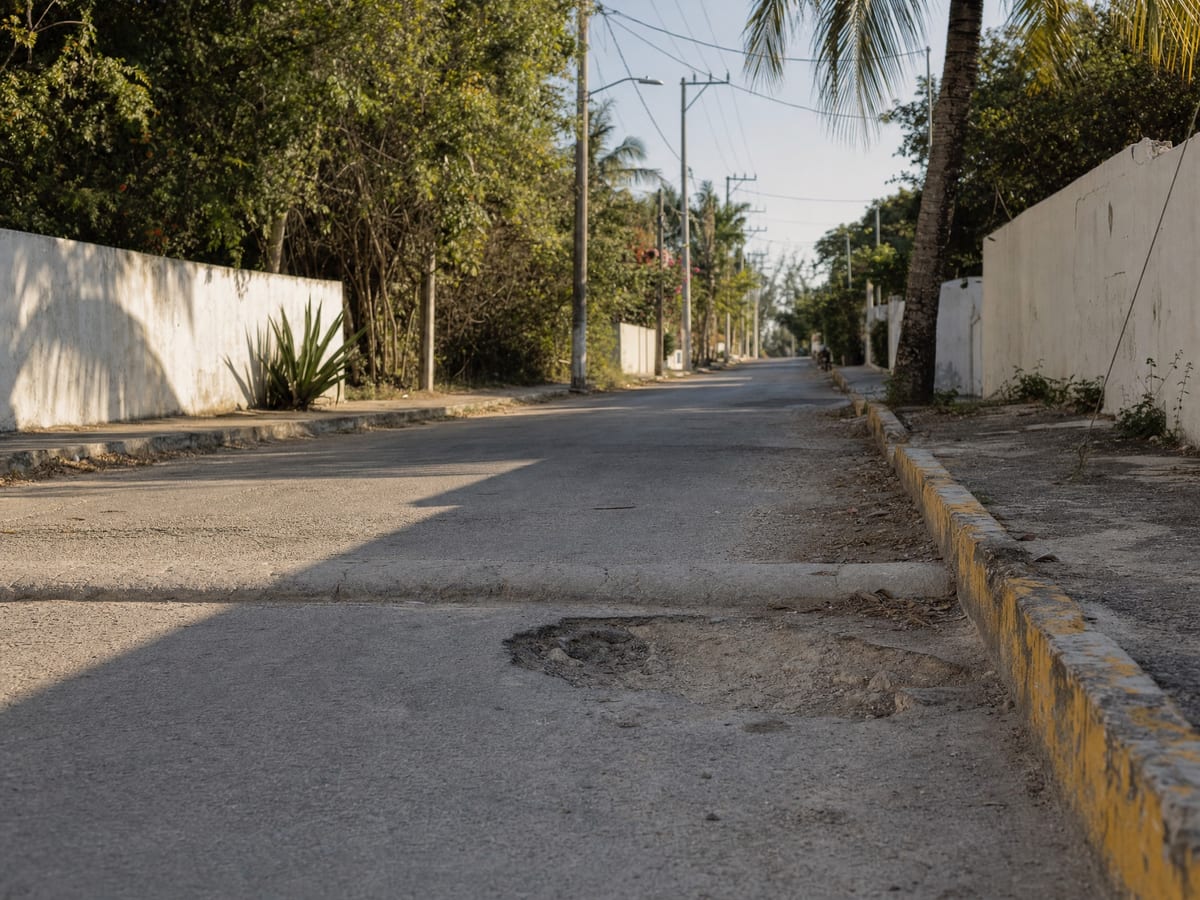
The roads here are the part nobody warns you about. Not the traffic, not the police, not the other riders — the surface itself. It is the reason most of the injuries we hear about happen, and almost all of it comes down to going too fast for a road you cannot read yet.
None of this is meant to put you off. Tulum on two wheels is the best way to see this coast. It just rewards riding slowly for the first day, and here is exactly what you are looking for.
Topes: the thing that actually hurts people
A tope is a Mexican speed bump, and they are nothing like the gentle ramps you are used to. They are tall, steep, and they are everywhere — at town entrances, before schools, at junctions, outside anywhere that wanted traffic to slow down and simply built one.
The problem is not the tope. It is that you often cannot see it. Plenty of them have no sign before them and no paint on them at all, and an unpainted tope is the same grey as the road it sits on. In flat midday light it disappears completely. At dusk, when the shadows go long, it disappears again for a different reason.
Hit one at speed and the suspension bottoms out, the bars go light in your hands, and the scooter lands before you do. That is how people come off. If you are carrying a passenger it is worse — they are higher, they are not holding the bars, and they have no warning at all.
What to do about it is simple and it costs you nothing:
- Assume there is one. Approaching any junction, any school, any cluster of shops, any place the road narrows — ride as though a tope is there, because usually it is.
- Watch the car in front. Brake lights on a straight, empty-looking road almost always mean a tope. That car is your early warning system; stay far enough back to use it.
- Cross it slowly, straight, and off the brakes. Square up to it, come off the brakes just before the wheel touches, and let the suspension do its job. Braking across a tope is what pitches you forward.
- On a bicycle, get your weight off the saddle for the half-second you are on it. Your legs are better suspension than the bike has.
Potholes, and why night is the real problem
Tulum has potholes that would be fenced off and signposted somewhere else. Here there is no sign, no cone, and no paint — just a hole, sometimes a deep one, in the middle of a lane that was fine last week.
In daylight you will see them in time if you are not flying. After dark is a different story. A headlight flattens the road in front of you: the texture goes, the shadows that would have shown you the edge of a hole go with it, and the first you know about it is the front wheel dropping. In the rainy season it is worse again, because a puddle gives you no information at all about what is underneath it — two centimetres and twenty centimetres look identical from a moving scooter.
The rule for riding at night is to go slowly enough to stop inside your own headlight. Not inside the road you remember, or the road the car in front just took at speed. Inside the piece of road you can actually see. That is usually a lot slower than it feels like it should be, and it is the single easiest way to not end your trip early.
For the same reason, treat a puddle as solid ground you have not checked: go round it if you safely can, and go through it slowly and upright if you cannot.
This is also, incidentally, why renting here costs what it does — these roads are brutal on vehicles, and keeping a fleet safe on them is most of the real expense of this business.
Much of Tulum has no road signs at all, so read the road instead
Away from the main avenues, plenty of streets have nothing: no give-way markings, no stop signs, no arrows, and no indication of which way the traffic is supposed to go. The information is still there, it is just not written down.
The parked cars tell you the direction. If every car down both sides of a street faces the same way, that is the direction of travel and it is a one-way street. Cars facing both ways means it is two-way. It takes two seconds at the corner, it is right nearly every time, and it is the single most common reason visitors get pulled over here — there is more on that in our guide to renting a scooter in Tulum.
Two more habits worth having on unsigned streets:
- Treat every junction as a give-way, whether or not anything says so. Assume the other person believes they have priority, because they probably do.
- A paved road does not stay paved. Tarmac turns to sand, dust or loose gravel without warning or any change in colour, often mid-corner. How to ride that surface is a post of its own.
Where you park: the yellow curb, and the corners
This one costs money rather than skin, and it catches people constantly.
A yellow painted curb means no parking at any time. Not for five minutes, not while someone waits with the scooter, not while you run in for a coffee. It is not a loading bay and there is no polite version of it. Park on one and you are liable to come back to an empty space.
And here is the part that catches careful people: no yellow paint does not mean you may park there. Paint fades, gets worn off by tyres, and in plenty of streets was never applied. Never park on a corner, painted or not. Corners and the approaches to junctions are off-limits because a parked vehicle there blocks the sightline of everyone turning in — that is the actual reason, and it holds whether or not anybody has been round with a brush recently.
A row of other scooters is not permission either. It usually just means several people are about to have the same bad afternoon.
If it is towed, here is what you are actually in for: finding out which corralón it went to, getting across town to it, the release fee, the paperwork, and — on a rental — the extra step of the vehicle not being in your name. It is half a day of your holiday minimum and it will cost more than the rental did.
If you are not sure about a spot, ask us. We would far rather tell you where to leave it than hear how the afternoon went.
The speed that makes all of this a non-issue
Every item on this page has the same answer, which is why it is worth saying once, plainly.
Ride at a speed that leaves you time to react to something you have not seen yet — a tope, a hole, a dog, a car pulling out of a street with no sign on it. That is usually slower than the traffic around you, and that is completely fine. Nobody here is in a hurry and nothing on this coast is worth arriving at ten minutes sooner.
Helmets, while we are at it, are mandatory for the rider and the passenger, and a tope you did not see is precisely the scenario they exist for. The law and the fine are here.
If you do hit something
- Stop somewhere safe and actually look at the vehicle. A hard pothole hit can bend a rim, pinch a tube, or knock the forks out of line, and none of those feels obviously wrong for the first kilometre.
- Check the tyre pressure and the steering before carrying on. If the bars pull to one side or the front end feels vague, stop riding it.
- Call us. Any of our rentals, any time we are open — we would far rather come and look at it than have you ride home on something bent. It is not a conversation about blame; it is a conversation about you getting back safely.
None of this should make the roads sound frightening. They are not. They are just unlabelled, and once you know what to look for, you read them the way everyone who lives here does — automatically, and without ever needing a sign.
Questions people ask
- What is a tope?
- A tope is a Mexican speed bump, and they are far taller and steeper than the ramps most visitors are used to. Many have no warning sign and no paint, which makes an unpainted one the same grey as the road around it — effectively invisible in flat midday light and again at dusk. Hitting one at speed bottoms out the suspension and is one of the most common ways visitors come off a scooter here.
- How do I spot a tope before I hit it?
- Watch the brake lights of the car in front: on an otherwise empty, straight road they almost always mean a tope. Beyond that, assume one exists at every junction, school, cluster of shops and point where the road narrows, because usually there is. Cross it slowly, square on, and off the brakes.
- Is it safe to ride a scooter in Tulum at night?
- It is fine if you slow down properly. The problem after dark is potholes: a headlight flattens the road surface, so the shadows that would have shown you the edge of a hole disappear and the first warning is the front wheel dropping in. Ride slowly enough to stop inside the piece of road your headlight is actually lighting, and treat every puddle as a hole you have not measured.
- How do I know which way traffic goes on a street with no signs?
- Look at the parked cars. If every car down both sides faces the same direction, that is the direction of travel and the street is one way. Cars facing both ways means two-way. Much of Tulum outside the main avenues has no arrows, stop signs or give-way markings at all, so this is the tell locals use without thinking about it.
- What does a yellow curb mean in Tulum?
- No parking at any time. There is no five-minute version and it is not a loading bay — park on one and your vehicle can be towed.
- Can I park on a corner if there is no yellow paint?
- No. Paint fades, wears away under tyres, and in many streets was never applied in the first place, so the absence of it tells you nothing. Corners and junction approaches are off-limits regardless, because a parked vehicle there blocks the sightline of everyone turning in. A row of other scooters already parked there is not permission either.
- What happens if my rental scooter gets towed in Tulum?
- You will need to find which corralón it was taken to, get across town, pay the release fee and deal with the paperwork — with the extra complication on a rental that the vehicle is not registered in your name. Budget at least half a day and more money than the rental cost. If you are unsure about a parking spot, ask the shop first.
- What should I do if I hit a pothole hard?
- Stop somewhere safe and look at the vehicle before riding on. A hard hit can bend a rim, pinch a tube or knock the forks out of line, and none of those necessarily feels wrong straight away. Check the steering and the tyre, and if anything pulls to one side or feels vague, stop and call us rather than riding it home.