
Do You Need a Helmet in Tulum? The Law in 2026
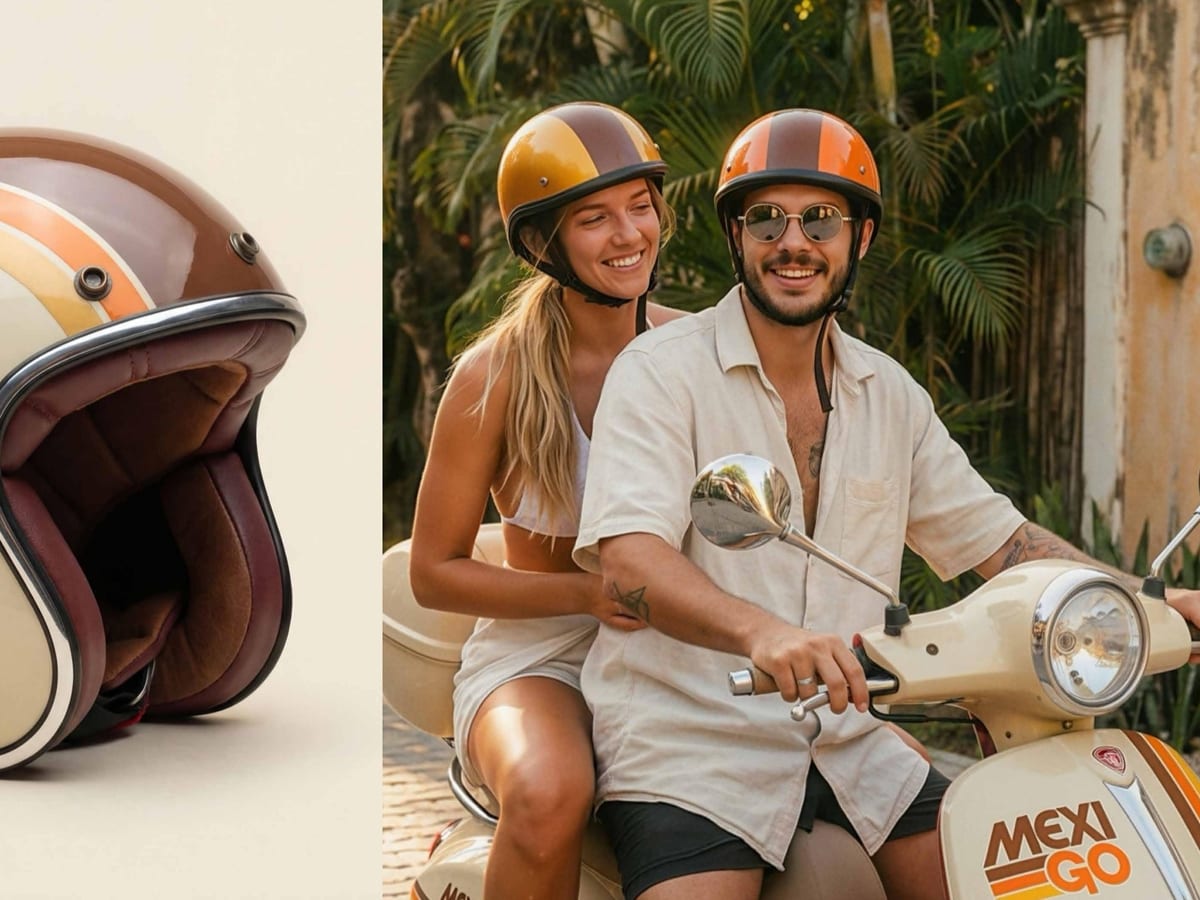
The short answer, before anything else:
- Scooter or motorbike — a helmet is required. Rider and passenger. This is not a recommendation.
- Bicycle — not required. Cyclists are expressly exempt in the regulation itself.
- E-bike — not mentioned in the rules at all. In practice treated as a bicycle.
- With us — a helmet costs you nothing either way. Free with every bicycle, e-bike and kids' bike; two included with every scooter.
Now the detail, because this is one of those questions where everybody has heard something different.
What the regulation actually says
Tulum's traffic regulation has a chapter — Chapter X — covering bicycles, tricycles and motorcycles. Article 63, section IV reads:
"Usar casco. Los acompañantes también deben portarlo; se exceptúa de esto a los ciclistas."
Wear a helmet. Companions must wear one too. Cyclists are excepted from this.
Two phrases there do a lot of work:
"Los acompañantes también deben portarlo." The passenger as well — not just the person steering. This is the one that catches people out. Two-up on a scooter with one helmet between you is a breach, and it's the most common version of this we see.
"Se exceptúa de esto a los ciclistas." Cyclists are exempt. That's written into the regulation, not a local custom or a tolerance. If somebody has told you that you're legally required to wear a helmet on a bicycle in Tulum, they're wrong.
The penalty schedule at the end of Article 63 places section IV among the heaviest in the article — 12 days' minimum salary, the same band as riding against the direction of traffic.
What about e-bikes?
Here's where we'd rather be honest than confident.
The regulation doesn't mention e-bikes. It was written around three categories — bicycles and tricycles, both defined as human-powered, and motorcycles, defined in Article 4, section XVII as a motorised vehicle of two wheels. A pedal-assisted e-bike sits much closer to the bicycle end of that, and is treated as one in practice.
So: no, there's no helmet requirement we can point you to for an e-bike. But an e-bike is quicker than a bicycle, and quicker than most people expect the first time they twist the throttle on the beach road. The legal obligation isn't there. The reason to wear one is.
Why we hand you one anyway
We're not going to pretend the law says something it doesn't, and we're not going to make you wear a helmet on a bicycle. What we will do is put one in your hand, free, every time — and tell you plainly why we think you should take it.
- The beach road. Narrow, no proper shoulder, and shared by vans, taxis, pedestrians and cyclists who stop without warning.
- Topes. Tulum's speed bumps are tall and frequently unpainted. Hitting one you didn't see, on a bike, puts you over the bars.
- Sand and gravel. Blown across the tarmac near the beach, and about as grippy as ice on a tyre leaned over.
- Night. Most roads here are unlit, and not every driver is looking for you.
None of that is dramatic, and none of it is unique to Tulum. It's just that a helmet is free, weighs nothing, and the downside of not having one is the sort that doesn't heal on a two-week holiday.
Riding with children
The cyclist exemption makes no distinction by age. Legally, a child on a bicycle here doesn't need a helmet either.
We'd still put one on them, and we have kids' sizes at no charge. If you're renting a child seat or a trailer, ask — we'll size a helmet properly rather than handing you an adult one with the straps pulled in.
"I heard there's a new helmet law with plate numbers on it?"
You have, and it's real — but it isn't in force, and it doesn't touch bicycles.
Quintana Roo approved what locals call the Ley Chaleco in July 2024. It would require motorcycle riders and passengers to wear a helmet carrying a sticker of the vehicle's plate number, plus a reflective vest printed with the same number. Its application has been deferred to 2027 while the state builds the system to issue them — and when it does arrive, the stickers and vests are to be supplied free by the authorities.
So if you've read a worried forum post about it: it doesn't affect your rental now, and it has nothing to do with bicycles or e-bikes at any point.
What's included with each of our rentals
| Helmet required by law? | What we give you | |
|---|---|---|
| Scooter / motorbike | Yes — rider and passenger | Two helmets, included |
| E-bike | No | Helmet free on request |
| Bicycle | No — cyclists are exempt | Helmet free on request |
| Kids' bikes | No | Child-sized helmet, free |
What happens if a helmet gets damaged
A standard helmet comes with every scooter rental. It is in the price, and it sits under the deposit you have already paid — there is nothing extra to pay for it.
Premium helmets are free as well. The only difference is that they carry their own additional refundable deposit, which you get back when the helmet comes back sound.
If a helmet is damaged, it is charged against the deposit. We would rather say that plainly at the counter than surprise anyone afterwards, and we will tell you the replacement cost before you ride.
The reason is not bookkeeping — it is how a helmet works. The hard outer shell spreads the force of a blow; the crushable liner underneath absorbs it by permanently deforming. That is a one-time mechanism. Once a helmet has taken a real impact, or a hard enough drop onto concrete, the liner has done its job and cannot do it again — even when the shell still looks perfect. There is no inspection that makes it safe again, and no way to recondition it.
So a helmet that has been hit does not go back on the rack. It is retired and replaced. Charging for it is not a penalty for having a bad day — it is the cost of something that can no longer be handed to the next rider. One person’s accident should not become the next rider’s risk, and it should not become our cost either.
Put another way: the fact that a single impact writes a helmet off is precisely the property you are paying for. It absorbed energy that would otherwise have gone into your head.
And if we offer you the premium helmet, take it. It costs nothing but the larger deposit, and in a real crash it protects you considerably better. That is the entire reason we stock them.
If you're renting a scooter, it's worth reading our guide to licences and police stops as well — the helmet rule is the one most likely to come up at a checkpoint.
Sources
- Reglamento de Tránsito para el Municipio de Tulum — Art. 4 (V, VI, XVII), Art. 63 (IV) and its penalty schedule. Published in the Orden Jurídico Nacional: ordenjuridico.gob.mx
- Ley de Movilidad del Estado de Quintana Roo — Art. 218 Bis (the Ley Chaleco), added by decree published 24 July 2024, with its implementation programme in the transitory articles: full text
We are a member of 1Tulum, a coalition of Tulum businesses held to one published standard — which includes telling you when the law does not require something, even where it would be easier to let you assume it does.
General information, current at the time of writing — not legal advice.
Questions people ask
- Is a helmet compulsory on a scooter in Tulum?
- Yes, for the rider and the passenger. Quintana Roo's traffic rules require it and it is routinely checked at the roadside.
- Do cyclists have to wear one?
- No. Cyclists are explicitly exempt under the state's mobility law. We will still offer you one, and it costs nothing either way.
- Do you charge for helmets?
- No. A helmet for every rider is included in every scooter rental. If a shop in Tulum charges extra for one, that is a choice they have made, not a cost being passed on.
- What about a child on the back?
- The same rule applies to any passenger: a helmet that fits, and feet that reach the pegs. If their feet do not reach, they are too small to ride pillion safely.