
Is Tulum safe? An honest answer from people who rent the vehicles
This is one of the most-searched questions about Tulum, and most of the answers are written by people selling you something — either a tour, or a scare story.
We are a rental shop. We are not a security service and we are not going to pretend to be one. What we can tell you is what actually goes wrong for the visitors we deal with every day, because we are the ones who hear about it when their trip gets cut short. The honest version is this: the thing most likely to send you home early is not crime. It is the road.
The short answer
Tulum is a tourist town full of people having an ordinary good time, and the overwhelming majority of visitors have an entirely uneventful trip. The risks that actually materialise, in rough order of how often we see them:
- Road accidents — overwhelmingly the biggest one, and almost entirely preventable
- Heat, sun and dehydration — ruins more days than anything else on this list
- Rental disputes — deposits withheld, damage charged, scooters impounded
- Opportunistic theft — phones and bags left unattended, mostly on the beach
For anything beyond that, read your own government's travel advice rather than a rental company's blog. That is genuinely not our lane, and anyone in this town who tells you they can give you a definitive answer on it is overreaching.
The road is the real risk, and it is the fixable one
Almost every serious injury we hear about involves a visitor on two wheels in their first forty-eight hours. The pattern repeats so exactly that it is worth setting out:
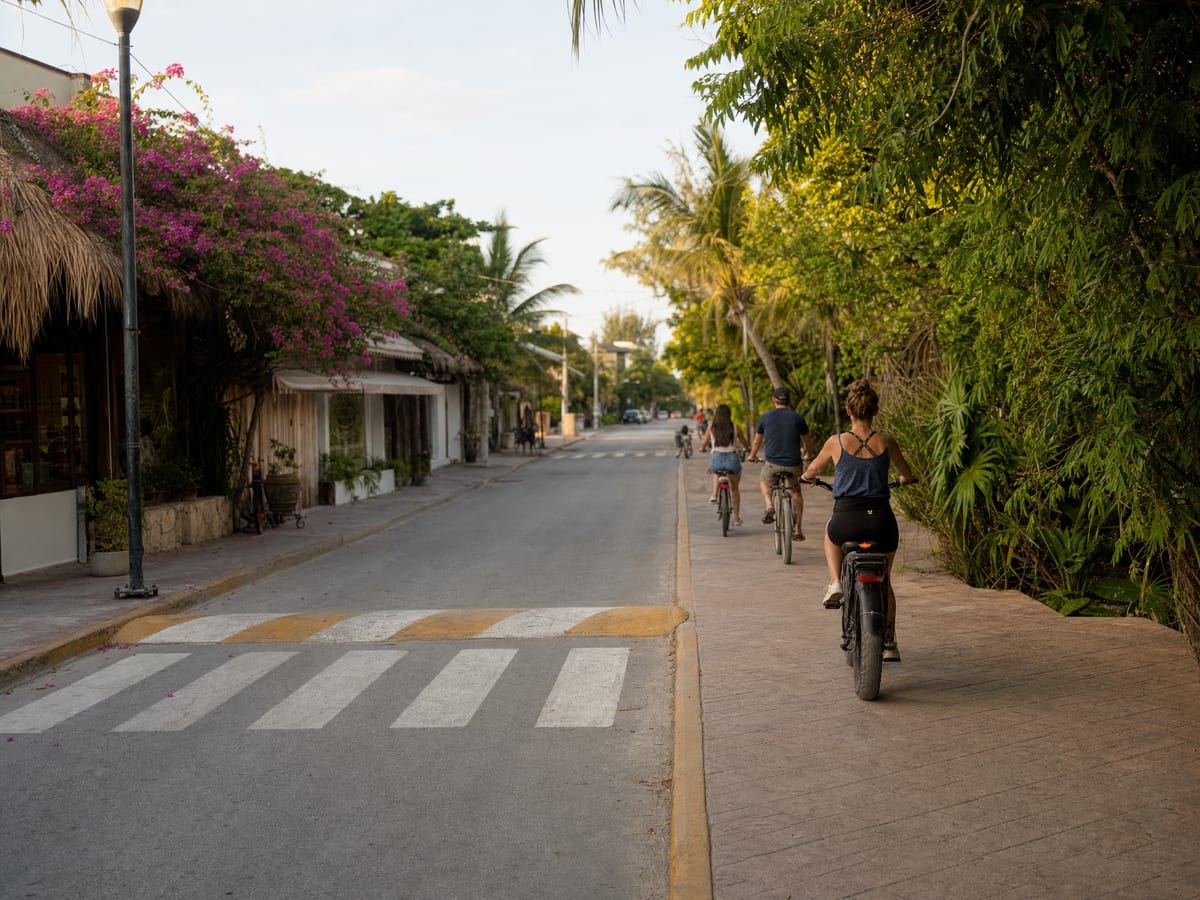
- A tope nobody saw. Mexican speed bumps are tall, often unpainted and frequently unsigned, and hitting one at speed is the single most common way people come off. They are genuinely hard to see.
- A pothole at night. A headlight flattens the road surface, the shadow that would have shown you the hole disappears, and the first warning is the front wheel dropping in.
- Riding too fast for a road you cannot read yet. Locals know where the surface changes. On day one, you do not.
- No helmet. Mandatory on a scooter here for rider and passenger, and the law exists precisely for the scenarios above.
None of that requires luck to avoid. It requires going slower than feels necessary for the first day, keeping your lights on, and wearing the helmet. That is the whole intervention, and it removes most of the risk on this page.
At night, the road you choose matters
Three roads connect the town to the beach and they are not equivalent after dark. One has street lighting and a bike path. One has neither, carries fast traffic, and collects the late crowd coming back from the beach clubs — who are not all sober. Which one you ride home on is a real safety decision rather than a preference, and it costs you about four minutes to get it right.
Be visible: lights front and back, and something other than the black everyone packs for Tulum.
Heat is underrated and it is relentless
This is the risk nobody writes about and we see constantly. The beach road has no shade. The ride back is always longer than the ride out. People set off at two in the afternoon with half a bottle of water and are genuinely unwell by four.
Ride in the morning or the late afternoon, carry more water than you think you need, and treat midday as the hours to be in the sea or under a palapa rather than on a bike. An e-bike is not a luxury here as much as a heat-management tool.
The rental itself is a risk worth taking seriously
This is the part we know better than anyone, because we are inside the industry: around five of the hundred-plus scooter rental businesses in Tulum hold the permit that makes the activity legal. The rest are operating without it, and the consequences land on the renter — an unregistered scooter can be impounded with you standing beside it, and insurance that covers only the machine leaves your medical costs with you.
Before you hand money to anybody, including us, ask the two questions that sort the legal shops from the rest: is the vehicle plated and registered to the company, and does the insurance cover the rider and passenger or just the vehicle.
Police stops are routine, and there are rules
You may well be stopped, particularly at night, and that is not in itself a problem. Carry your licence and the rental paperwork, wear the helmet, and know that an officer must tell you the offence and show you the regulation that creates it. Never pay anything at the roadside: a real fine is a written ticket paid at the Municipal Treasury. The full version, including what to do if a stop goes wrong, is here.
Ordinary sensible things
- Do not leave bags on the beach while you swim. This is the most common theft we hear about, by a distance, and it is the same everywhere in the world.
- Nothing left on a parked bike. No phone in the holder, nothing in the basket, and use the lock.
- Use cash machines inside banks or shops rather than standalone ones on the street, and keep an eye on your card.
- Agree taxi fares before you get in. Flagged taxis here have no meters.
- Swim where other people are swimming. Some beaches have real current, and cenotes have cold water and limestone steps that are slippery.
If something does happen
Emergencies: 911. It works here and operators can usually find English.
If it involves a vehicle you rented from us, call us — any hour we are open — before you make decisions at the roadside. We would far rather come out and look at it than have you negotiate something alone. And our WhatsApp assistant answers instantly at any hour, in your language, which is the fastest way to find out what the rules actually are when you are standing somewhere unfamiliar.
So: is Tulum safe?
For the overwhelming majority of visitors, yes — and the few who have a bad trip mostly had a preventable one. Wear the helmet. Go slower than feels necessary for the first day. Drink more water. Rent from someone who can show you their paperwork. Come home along the lit road.
That is not a disclaimer. It is the actual list, and it covers almost everything we ever see go wrong.
Questions people ask
- Is Tulum safe for tourists?
- For the overwhelming majority of visitors, yes, and most trips are entirely uneventful. In our experience as a rental business the risks that actually materialise are, in order: road accidents, heat and dehydration, rental disputes, and opportunistic theft of unattended bags and phones. For questions beyond that, read your own government's travel advice rather than any local company's blog.
- What is the biggest danger for visitors in Tulum?
- The road, by a long way. Almost every serious injury we hear about involves a visitor on two wheels within their first forty-eight hours — usually an unpainted speed bump they did not see, a pothole at night, or simply riding too fast for a road they cannot read yet. Going slowly for the first day, keeping lights on and wearing the helmet removes most of that risk.
- Is it safe to ride a scooter in Tulum?
- Yes, with three conditions: a motorcycle licence, which is the law here and which a car licence does not cover; a helmet for both rider and passenger, also the law; and a rental from an operator who is actually legal. Around five of the hundred-plus scooter rental businesses in Tulum hold the permit that makes the activity legal, and on an unregistered vehicle the consequences fall on the rider.
- Is it safe to ride at night in Tulum?
- It is, if you choose the road. Of the three roads between town and the beach only one has street lighting and a bike path; the others are unlit, carry fast traffic and collect the late crowd coming back from the beach clubs, who are not all sober. Take the lit one, keep lights front and rear, and wear something that is not black.
- Is pickpocketing or theft a problem in Tulum?
- Opportunistic theft is the common one and it looks the same as anywhere: bags and phones left unattended on the beach while people swim. Keep nothing on a parked bike, use the lock, prefer cash machines inside banks or shops to standalone street ones, and agree taxi fares before getting in, since flagged taxis have no meters.
- What number do I call in an emergency in Mexico?
- 911, which works nationally and where operators can usually find English. If it involves a vehicle you rented, call the rental shop before making decisions at the roadside — and our WhatsApp assistant answers instantly at any hour, in your language, if you need to know what the rules actually are.